
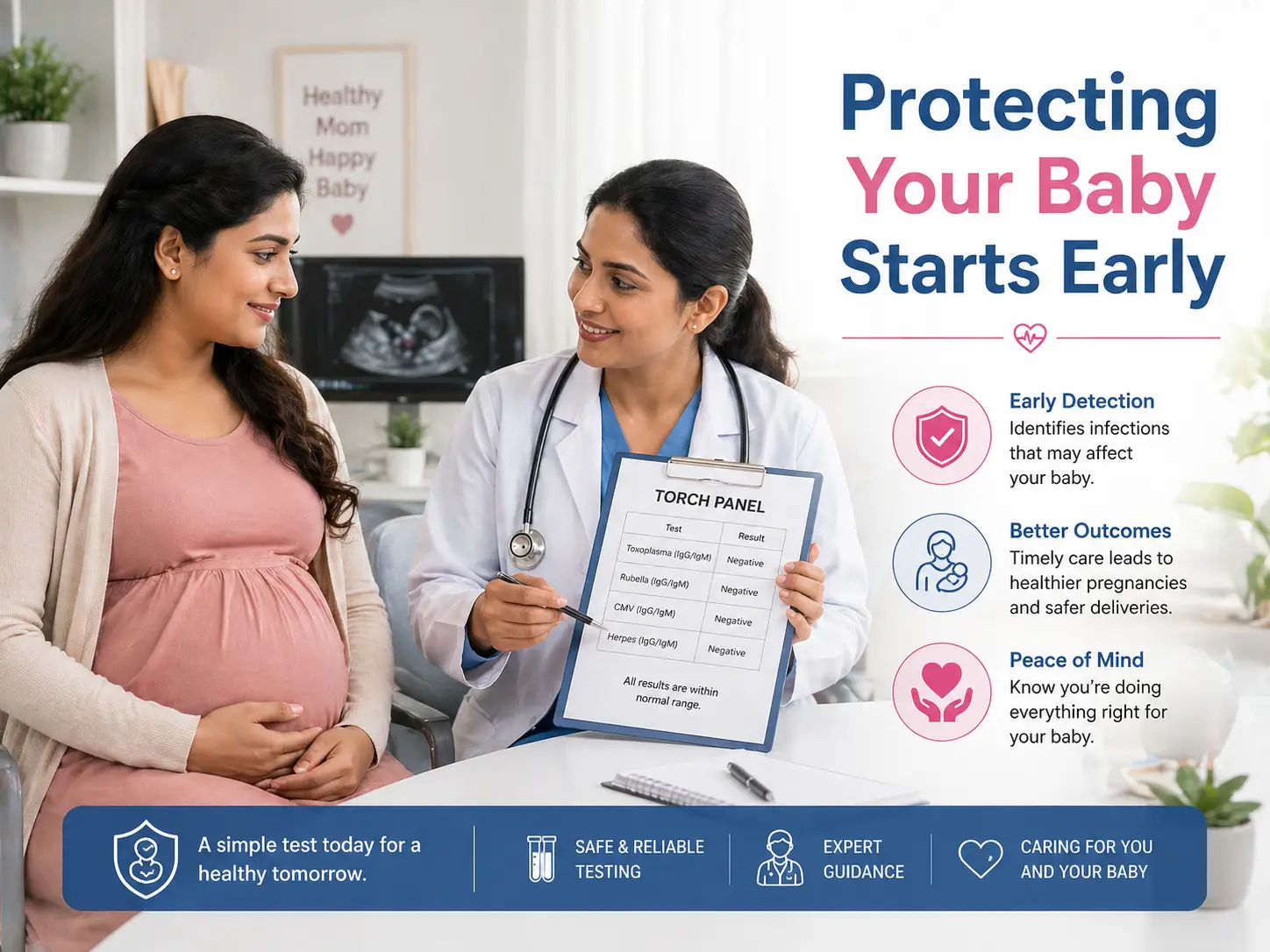
Pregnancy is a time of joy. But it’s also a time when certain infections — often mild in adults — can cause devastating harm to the developing baby.
TORCH infections are among the most important threats. And yet, many Mumbai women enter pregnancy without being screened for them.
What Is TORCH?
TORCH is an acronym for a group of infections that can cross the placenta and infect the foetus:
- T — Toxoplasmosis
- O — Others (Syphilis, Hepatitis B, Varicella, Parvovirus B19)
- R — Rubella (German Measles)
- C — Cytomegalovirus (CMV)
- H — Herpes Simplex Virus (HSV)
These infections may cause no symptoms or only mild flu-like symptoms in the mother. But in the developing baby, they can cause miscarriage, stillbirth, premature birth, hearing loss, vision problems, intellectual disabilities, and congenital heart defects.
Why Mumbai Women Are Particularly at Risk
Toxoplasmosis is transmitted through raw or undercooked meat and cat faeces. Mumbai’s street food culture and the rising popularity of rare-cooked meat dishes increase exposure.
CMV — the most common congenital infection worldwide — spreads through saliva and urine. Women who work with young children (teachers, daycare workers) are at higher risk. So are those living in densely populated urban environments.
Rubella remains a concern despite vaccination programmes. Mumbai’s migrant population from areas with incomplete immunization histories creates pockets of risk.
A 2020 study from Mumbai found CMV seroprevalence of over 90% in Indian women — meaning most have encountered the virus. But primary infection or reactivation during pregnancy can still harm the foetus.
What Does the TORCH Panel Test For?
For each pathogen, the lab measures:
- IgM antibodies indicate a recent or active infection
- IgG antibodies indicate past exposure and immunity
The combination of IgM and IgG results tells the story: Are you immune? Were you recently infected? Is there a risk to the baby?
When Should TORCH Be Done?
Ideally, before conception, during preconception planning. This gives time to vaccinate if needed (e.g., Rubella) or treat infections before pregnancy begins.
If not done before conception: in the first trimester, ideally before 12 weeks.
The TORCH panel is available at Aspira Diagnostics as part of its Gynecology Profiles range. It is also incorporated in our comprehensive preconception and antenatal packages — with results on WhatsApp and email for your convenience.
The Bottom Line
You wouldn’t skip your anomaly scan. Don’t skip TORCH testing either. A simple blood test done at the right time can protect your baby from entirely preventable conditions.